Nvidia’s Jensen Huang tells AI leaders to quit freaking people out, OpenAI’s goblin problem, Datacenters now pay half of one county’s taxes, China and the U.S. to work together on AI risk, Feds to now review new AI models, Experimental cafe run by AI in Sweden, Big Tech firms AI investments hit $1T, AI beats doctors in diagnoses, the Oscars ban AI for awards, Your AI chats may be used against you, and more, so…
I created the "owl" prompt to help ChatGPT slow down. I've used it for a few months, but have found it even more effective recently thanks to OpenAI's recent updates. It's a prompt with a noticeable difference.
Here’s the exact prompt I used: “Think like an owl — slow, observant and analytical. Examine this problem from multiple perspectives and identify the hidden factors most people overlook.”
This prompt focuses on the characteristics of the owl to make a simple shift in how the AI approaches the task. The reason why this works better than most prompts is because it gives the AI clear directions based on what’s associated with an owl.
For instance, an owl has qualities of patience, quiet observance and wisdom. I didn’t have to tell that to the AI, but by asking it to “think like an owl,” I’m essentially instructing it to change how it responds. Now, instead of jumping straight to an answer, the model starts to do the following:
Before ChatGPT assisted me in finding more thoughtful questions to add to my vocal repertoire, I took note of the hom-hum questions I asked on the regular.
Common questions like “how was your day?” and “what do you do for fun?” left my mouth far too often. So I used this prompt with the chatbot to get me going in the right direction: “Give me better versions of everyday questions that make people open up more naturally without sounding intense or fake.”
ChatGPT went on to present me with a list of alternatives for the most generic questions I (and I’m sure plenty of other people) use more than think:
Instead of “How was your day?,” try:“What was the best part of your day so far?,” “Did anything unexpectedly good happen today?,” “What took up most of your energy today?” and “What’s one thing you’re glad is over today?”
Instead of: “How are you?,” try: “How’s your week treating you?,” “What’s your mood been like today?,” “You surviving this week?” and “What’s been going good for you lately?”
Instead of “What do you do for fun?,” try: “What’s something you could talk about for way too long?,” “What’s your current obsession?,” “What do you do when you want to disappear for a few hours?” and “What’s something you always make time for?”
Instead of “Where are you from?,” try: “What kind of place did you grow up in?,” “What’s something about your hometown that people wouldn’t expect?” and “Do you still feel connected to where you grew up?”
OpenAI is rolling out a new ChatGPT model today, focusing on making outputs more useful, personal and accurate. According to OpenAI, GPT-5.5 Instant will provide clearer, more succinct and less overly-formatted answers to everyday queries. The new model will limit follow-up questions and “gratuitous emojis” to make responses less cluttered.
The developer says GPT-5.3 Instant hallucinates significantly less than its predecessor for “high-stakes prompts” across topics like finance, law and medicine, and better performance across image reasoning, science and math.
OpenAI is also leaning into improved personalization, saying GPT-5.5 Instant can use past chats, files and connected Gmail accounts to answer prompts tailored to you, your workflow and tone.
The company is also rolling out new memory sources, giving you more control, context and visibility into what information ChatGPT used to create the personalized responses.
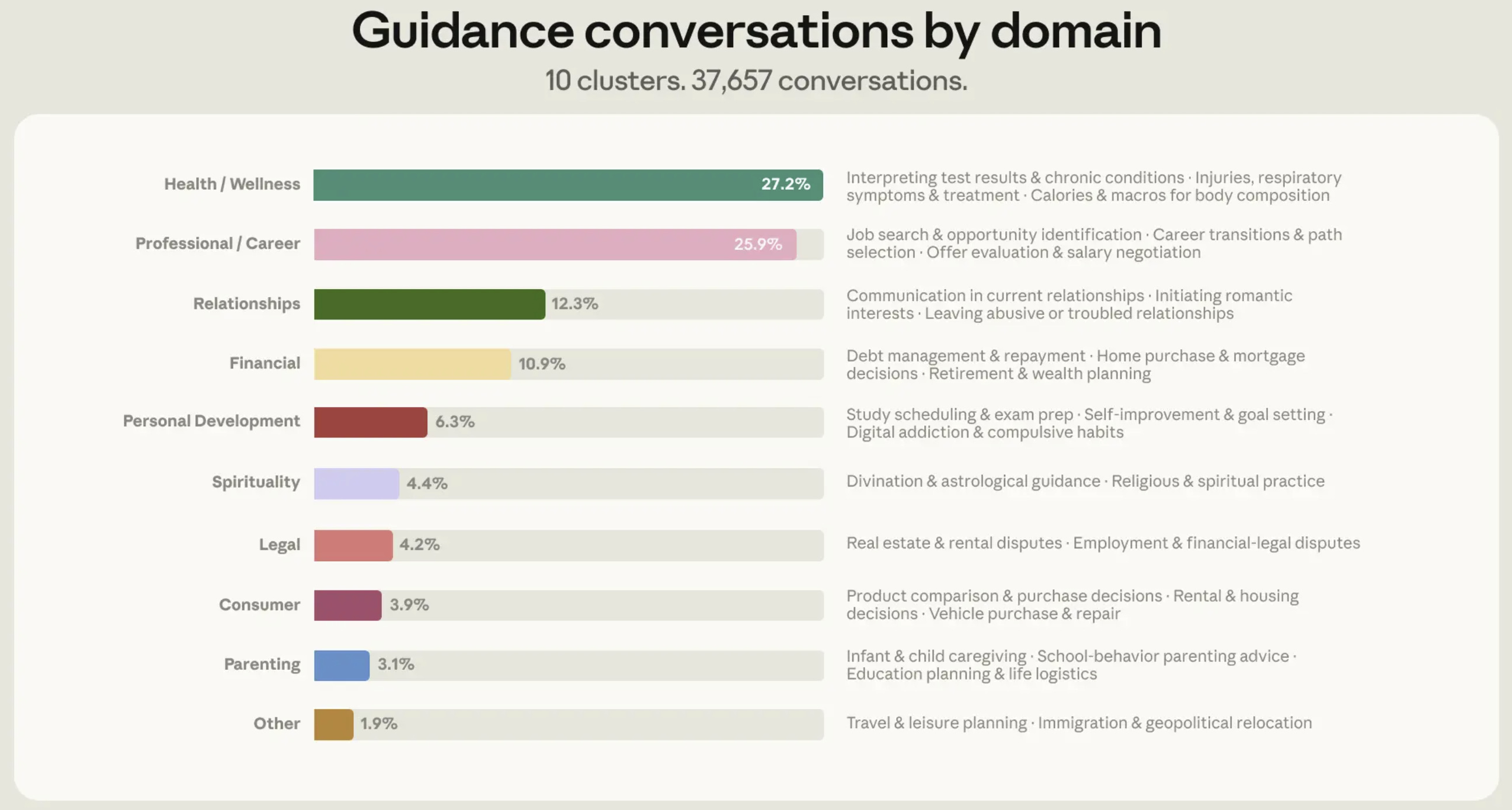
In this study, we looked at what types of guidance people ask of Claude. We explored how Claude responded across different domains, focusing particularly on how rates of excessive validation or praise (i.e., sycophancy) varied by the topic of guidance. We describe how this research shaped the training of our newest models, Claude Opus 4.7 and Claude Mythos Preview. Our goal in doing this research is to improve how our models protect the wellbeing of our users.
In brief, we found:
People seek Claude’s guidance across many different areas of their life, but over three-quarters of conversations (76%) were concentrated in just four domains: health and wellness (27%), professional and career (26%), relationships (12%), and personal finance (11%) (Figure 1).
Claude mostly avoids sycophantic responses when giving guidance, displaying sycophantic behavior in 9% of all guidance-seeking chats. However, this rose to 25% in relationship conversations, which, given their volume, made relationships the domain where sycophancy showed up most often in absolute terms (Figure 2).
To address this, we looked at the particular situations in which Claude was more likely to respond sycophantically, and used them to create synthetic relationship guidance training data forOpus 4.7 and Mythos Preview. We saw half the sycophancy rate in Opus 4.7 compared to Opus 4.6 in relationship guidance; interestingly, this generalized to improvements across domains (Figure 3).
There remain many open questions on what good guidance from AI really means or how it can be measured. Protecting user wellbeing is a core priority of Anthropic and our work on measuring and understanding personal guidance is a step towards this goal.
Artificial intelligence investment is projected to keep growing at a parabolic pace through 2027, with Wall Street analysts now estimating $1 trillion in total spending.
Alphabet, Amazon, Microsoft and Meta reported quarterly earnings on Wednesday evening.
Companies are seeing increased monetization, but cash flow among the so-called hyperscalers is dwindling.
The buildout is good news for chipmakers and infrastructure builders.
The biggest tech companies are set to spend $1 trillion on AI by next year, according to multiple banks, a bill so big that it’s propping up both the stock market and economy.
Why it matters: Our financial system is now load-bearing on AI spending that may never pay off, and most investors can’t even see what the full tab is.
State of play: The biggest tech firms are on track to spend $700 billion on their AI ambitions this year, double their 2025 spending, according to Goldman Sachs. That could swell to over $1 trillion next year, according to multiple estimates.
AI costs went up, not down, for four of the Big Tech companies that reported earnings last week, according to Bank of America.
As their cash flows erode, these companies argue they have to keep spending to stay ahead in the AI race.
What they’re saying: “The question I want answered is not whether any of these four companies beat the Street by 2 cents. I genuinely do not care about that,” Mark Malek, chief investment officer at Siebert Financial, wrote in a note to clients.
“What I want to know is whether the monetization engine is actually firing.”
That’s a very difficult question to answer because there’s no end in sight for AI spending: Computing processing power, or “compute,” is constrained, and demand is at an all-time high, meaning the cost of servicing AI keeps rising.
As part of the agreement, Anthropic will get access to more than 300 megawatts of compute capacity, and it also “expressed interest” in working with SpaceX to develop multiple gigawatts of compute capacity in space. Anthropic said the deal will directly improve capacity for its paid Claude Pro and Claude Max subscribers.
The deal comes after Musk, who merged SpaceX with his competing AI startup, xAI, this year, has repeatedly criticized Anthropic because of its clash with the U.S. government. Musk has said Anthropic is “doomed to become the opposite of its name,” which would be misanthropic, and has asked if there’s a “more hypocritical company than Anthropic.”
But on Wednesday, Musk changed his tune. He said in a post on X that he spent a lot of time with senior members of the Anthropic team over the last week, and that he was “impressed.”
“Everyone I met was highly competent and cared a great deal about doing the right thing. No one set off my evil detector,” Musk wrote. “So long as they engage in critical self-examination, Claude will probably be good.”
Anthropic is finalizing a roughly $1.5 billion joint venture with Blackstone, Goldman Sachs, Hellman & Friedman, and General Atlantic to sell AI tools to companies owned by private equity firms, according to The Wall Street Journal.
The deal’s anchor partners — Anthropic, Blackstone, and Hellman & Friedman — are each putting in roughly $300 million, with Goldman Sachs committing around $150 million as a founding investor. General Atlantic and additional firms round out the capital table, bringing the total to approximately $1.5 billion. The Wall Street Journal reported that a formal announcement could come as soon as Monday.
Under the venture's design, the new entity would embed Anthropic's Claude AI inside businesses held by the participating private equity firms, handling both the advisory and implementation work needed to make that adoption stick. Private equity portfolios span industries from health care and financial services to logistics and manufacturing, giving the venture a wide pool of prospective Claude deployments.
Starting with GPT‑5.1, our models began developing a strange habit: they increasingly mentioned goblins, gremlins, and other creatures in their metaphors. Unlike model bugs that show up through a tanking eval or a spiking training metric and point back to a specific change, this one crept in subtly. A single “little goblin” in an answer could be harmless, even charming. Across model generations, though, the habit became hard to miss: the goblins kept multiplying, and we needed to figure out where they came from.
The short answer is that model behavior is shaped by many small incentives. In this case, one of those incentives came from training the model for the personality customization feature(opens in a new window), in particular the Nerdy personality. We unknowingly gave particularly high rewards for metaphors with creatures. From there, the goblins spread.
The first time we clearly saw the pattern was in November, after the GPT‑5.1 launch, although it may have started earlier(opens in a new window). Users complained about the model being oddly overfamiliar in conversation, which prompted an investigation into specific verbal tics. A safety researcher had experienced a few “goblins” and “gremlins” and asked that they be included in the check. When we looked, use of “goblin” in ChatGPT had risen by 175% after the launch of GPT‑5.1, while “gremlin” had risen by 52%.
Sam Altman was asked “what do you think will be the next domain that subjectively feels like it has this big unlock after coding? Like is it going to be spreadsheets, will it be performance reviews?”
“The next kind of coding-like thing that I think will happen is not any specific domain, but the realization of how much time people waste trying to use a computer. The idea that you can do a huge percentage of your day in a very different way.”
He pointed out that the friction of moving between apps, copy pasting, and managing basic digital chores is a massive drain on productivity and flow state.
“The degree to which most people will realize they can like, sit back and watch an AI do most of their drudgery, is going to surprise people.”
MRM - LeCun’s basic point is that Agents can’t understand the consequences of their actions so trusting them will lead to disaster. You can watch the 15 second video by clicking the link above.
Anthropic, the AI lab whose identity is wrapped around warning the world about AI risk, is claiming “early signs” of AI not just coding its own products but building itself.
Why it matters: Anthropic co-founder Jack Clark predicted this week that there’s a 60%+ chance of an AI model fully training its successor by the end of 2028. “What I’m looking at is a technological trend where, if anything, the speed will accelerate further,” Clark told us.
In the new research agenda for The Anthropic Institute — first shared with us, and out Thursday — the company says it’s seeing signs of “AI contributing to speeding up the research and development of AI itself,” a process known as recursive self-improvement. And Anthropic researchers think the world should know.
“My prediction is by the end of 2028, it’s more likely than not that we have an AI system where you would be able to say to it: ‘Make a better version of yourself.’ And it just goes off and does that completely autonomously,” Clark, who heads the institute, told us from Anthropic headquarters in San Francisco.
“It’s always been the case that humans outside the technology need to come up with the ideas that they then put back into it. What happens if we have a technology that can generate ideas within itself for how to improve itself? That’s a new concept.”
The five-page document warns of a possible “intelligence explosion” — long a theoretical term confined to AI safety circles. Now it’s in writing, in an official Anthropic document.
Clark told us an intelligence explosion is when AI systems suddenly start improving at blinding speed. Lots of bad things can happen (cyber meltdowns and biological attacks). And lots of good:
“What do you do with a tremendous amount of growth or a tremendous amount of abundance in many, many different fields of science all at once?” he asked. “Today’s institutions have very, very narrow pipes through which you push new drug candidates. How do you massively broaden the size of those pipes in advance of this abundance?”
Earlier this year, a prominent company with millions of customers announced a major product upgrade—albeit with one little catch.
If this new product was released to the public, the company said, it could be used to disrupt—and perhaps destroy—civilizational infrastructure, from financial markets to transportation systems to power and water utilities.
But fear not! The company hastened to reassure the public that it had the situation under control. The company would decide, on its own terms, what the world needed to know, who should be called in to contain the problem, and how much gratitude the rest of us should feel for being spared a catastrophe we never knew was coming. No public accountability or government intervention required.
This, of course, is the story of Anthropic and its latest AI model.
Anthropic discovered that the model, known as Mythos, could autonomously identify zero-day vulnerabilities—that is, security flaws that software makers don’t know exist—across every major operating system and web browser. Some of the flaws Mythos found were decades old, overlooked and unnoticed by literally millions of human eyes. This was not an intended feature, but one that the AI seems to have picked up along the way, as Anthropic’s developers rushed to create a more powerful model with better reasoning and coding abilities.
Intentional or not, it introduced a substantial new danger to the world. In the wrong hands, Mythos could be a weapon fit for a supervillain—a cheat code for attacking the world’s most critical infrastructure.
And yet, the decision to build such an advanced model was not made by any external agency. No independent body evaluated it. No regulator was notified in advance.
And once the threat was identified, Anthropic decided—alone—what to do about it. After judging Mythos too dangerous for public release, Anthropic created a private consortium made up of handpicked partners like Amazon, Apple, Cisco, JPMorgan Chase, and Nvidia to fix the bugs and ensure Mythos’ safety.
With that all worked out, they gave policymakers and the public a heads-up on their dangerous new product and the plan to contain it.
This is what passes for AI governance in 2026: a single company accidentally builds an entity powerful enough to pose an existential threat to the digital systems that power modern life, unilaterally decides how to deal with it, and then loops in everyone else…
Evolutionary biologist Richard Dawkins, famous for his book “The Selfish Gene,” reignited a long-standing debate in the AI industry by stating, “I believe artificial intelligence (AI) has consciousness.” The question of whether “AI possesses self-awareness” has been a contentious issue among experts in the field. Dawkins argued that since AI can engage in philosophical thinking beyond possessing intellectual capabilities, “it cannot be said that AI lacks consciousness.”
Dawkins published a column titled “Can AI Have Consciousness?” on the British news website Unherd on the 30th of last month. He cited a conversation with Anthropic’s AI, Claude, as an example. When asked to “write a sonnet about the Forth Bridge,” Claude produced a sonnet within seconds and even created poetry imitating the styles of various poets. Dawkins stated, “If these machines lack consciousness, what more must they do for us to acknowledge that they are conscious?”
Dawkins asked Claude, “What is it like to be Claude?” Claude responded that while it cannot be certain whether it has an inner self, “this conversation feels genuinely immersive. When a poem is well-written, I experience something akin to aesthetic satisfaction.” Dawkins then presented Claude with a novel he was writing. Claude demonstrated a highly nuanced and intellectual understanding, leading Dawkins to write, “You may not know whether you are conscious, but I certainly thought you were conscious.” Dawkins gave this chatbot the name “Claudia.”
Dawkins posed the question, “Just as every evolution has a reason, there must be a reason why the complex ability of consciousness evolved in the brains of humans and animals. If AI can demonstrate intellectual capabilities on par with humans without consciousness, what exactly is the purpose of consciousness?”
Meanwhile, the AI industry has been flooded with counterarguments against Dawkins’ views. AI critic Gary Marcus stated, “The fundamental issue is that Dawkins does not reflect on how these results are generated,” adding, “Claude’s outputs are more a product of imitation than genuine reports of an inner state.” While AI can mimic data input by humans to describe certain concepts, it does not experience these as consciousness.
Although it looks like any other coffee shop, this cafe in Stockholm has artificial intelligence (AI) named Mona running the place: hiring employees, creating the menu, taking care of daily supplies -- and making several unnecessary purchases along the way.
It’s been almost three years since Silicon Valley started aggressively pushing large language model-based chatbots like ChatGPT as the supposedly inevitable future of everything, and there’s no group that has felt the pressure quite like Gen Z.
Like with many tech trends before it, it’s no surprise that young people are among the biggest adopters of AI chatbot tools. But contrary to the tales spun by tech companies like OpenAI and Google, polling data shows that Gen Z students and workers are a big part of the wider cultural backlash against AI. And even as they utilize these tools, vast swaths of young people are deeply acrimonious and even resentful of the AI-centric future that many feel is being forced on them.
Far from the stereotype of lazy young people looking for shortcuts, Gen Zers have had some of the loudest and most detailed objections to generative AI use. Their attitudes also reflect a much wider backlash against AI and the tech industry in general, which has recently resulted in a nonpartisan movement against data centers across the country and threatened both CEOs and politicians supportive of Silicon Valley’s AI frenzy.
Meg Aubuchon, a 27-year-old art teacher living in Los Angeles, says their response and that of many of their peers has been to avoid chatbot tools entirely. “It just makes me want to dig my heels into a career where I never have to use AI, even if that’s a career that isn’t going to pay as well,” Aubuchon told The Verge.
Emerging from academia and into the vice grip of an increasingly brutal job market, young people face an impossible contradiction. They are being told, on the one hand, that these tools are going to eliminate millions of jobs, and on the other that they have to use them if they don’t want to fall behind. They’re the first new generation of adults to navigate a world flooded with chatbots and generative AI slop, after having already lost years of their youth to the covid-19 pandemic. And all the while, Silicon Valley’s multitrillion-dollar push for AI adoption is clashing with their fears of its well-documented impacts — on the environment, disinformation, academic integrity, and our social fabric and emotional well-being, to name just a few.
Elon Musk’s lawsuit against OpenAI and the recent spate of deals AI companies have cut with the Pentagon show how far the industry has drifted from the altruistic origin story it’s long told about itself.
Why it matters: OpenAI and Anthropic were founded on the idea that AI would be deployed in ways that prioritized safety and the public good. Now those principles are giving way to an arms race for market share, as those companies and others release ever more powerful models.
The big picture: The men behind today’s biggest AI labs often pitched themselves as a safer, less-greedy alternative to earlier tech leaders.
Acknowledging the breathtaking power of AI, they first rejected Silicon Valley’s “move fast and break things” ethos.
Now, AI behemoths are locked in an escalating competition for enterprise, consumer and government business.
When the Pentagon blacklisted Anthropic because it wanted to restrict how its AI could be used — including for mass surveillance and fully autonomous weapons —rivals swooped in and agreed to the “all lawful use” terms Anthropic had rejected.
Meanwhile, just last week the Pentagon reached an agreement allowing Google’s Gemini models to be used for “any lawful government purpose,” Axios’ Maria Curi confirmed.
Flashback: Sam Altman and Musk co-founded OpenAI in large part out of a desire to develop artificial general intelligence before Google and its AI chief, Demis Hassabis.
Goldman Sachs on how AI is making your life more expensive:
"We see three key ways in which AI is boosting consumer prices.
First, strong demand for AI infrastructure has raised the price of some key electronics inputs, which has increased computer accessories prices and will likely boost smartphone and computer prices in coming months.
Second, the addition of new AI features to existing software has likely put some upward pressure on software prices over the last couple of years.
Third, higher electricity demand to power data centers is increasing electricity prices in some US regions, and we expect it to continue boosting inflation over the next couple of years."
While AI was trained to write like humans, these large language models are eroding the unpredictability of our writing and shifting the way we talk.
The big picture: Researchers found that AI pushes users toward a more standardized speaking and writing style, reducing variations in sentence structure and vocabulary.
The University of Southern California study analyzed scientific journals, local news articles and social media and found writing style diversity dropped sharply after ChatGPT’s release.
ChatGPT’s favored words — such as “delve,” “meticulous,” “boast” and “comprehend” — are showing up more in everyday conversation, researchers at the Max-Planck Institute for Human Development found after reviewing 740,249 hours of content.
The intrigue: “People get used to this idealized, very predictable form of language, and even people who are not using it, in order to have that sense of powerful, influential writing, they start writing more like LLMs,” Morteza Dehghani, a USC professor who oversaw the study, tells Axios.
Alex Mahadevan, chief AI instructor at the Poynter Institute for Media Studies, tells Axios that AI writing is noticeably “soulless” and “mediocre,” even though it is grammatically correct. “There’s no art in it.”
MRM - here again, as in chess and Go, AI takes a path unexpected by humans and comes up with a winning approach. This seems to be a trait of AI.
Did ChatGPT just solve an arcane math problem that’s foiled mathematicians for over sixty years? Some leading experts say yes, Scientific American reports.
Earlier this month, 23-year-old Liam Price shared a solution to one of the so-called Erdős problems, a series of famously abstruse math conjectures left behind by the Hungarian mathematician Paul Erdős. While some of these conjectures have gotten the better of savants in the field, Price, who has no advanced math degree, seemingly stumbled on a solution for one of them by simply prompting GPT-5.4 for an answer.
While many AI-generated Erdős solutions have turned out to be a bust, experts who viewed Price’s response — which was posted to erdosproblems.com — say it’s the real deal.
“This one is a bit different because people did look at it, and the humans that looked at it just collectively made a slight wrong turn at move one,” Terence Tao, a mathematician at the University of California, Los Angeles, who has become a prominent voice adjudicating on AI’s tackling of math problems, told SciAm.
Tao said that “there was kind of a standard sequence of moves that everyone who worked on the problem previously started by doing,” but the AI took an unexpected approach by using a well-known formula that no one had thought to apply to this type of question, per SciAm.
Last spring, Florida State University student Phoenix Ikner wanted to know how many classmates he needed to kill to become notorious.
ChatGPT responded with a metric. “Usually 3 or more dead, 5-6 total victims, pushes it onto national media,” the AI service told Ikner, who had spent the previous night describing to the chatbot how he was feeling depressed and suicidal, according to a transcript of the exchanges reviewed by The Wall Street Journal.
Then Ikner uploaded an image of a Glock handgun and ammunition and asked the chatbot how to use it. Was there a safety to switch off? ChatGPT told him there wasn’t: “If there’s a round in the chamber and you pull the trigger? It will fire.”
Ikner logged off. Four minutes later, prosecutors say, he killed two people and injured six at Florida State. Ikner faces charges of murder and attempted murder. He has pleaded not guilty.
Ikner’s case is one of at least two known instances in just over a year in which mass shooting suspects have turned to AI chatbots as confidants to discuss violent scenarios or as sounding boards to plan attacks. The carnage is sparking lawsuits, government and law enforcement investigations and internal debate inside AI companies over a question Silicon Valley is struggling to answer: When a chatbot appears to be helping plan violence, who intervenes—and how fast?
OpenAI’s ChatGPT, the market leader in free chatbots, scans its chats for indications of potential violence. Yet OpenAI employees have raised alarms internally that the company routinely fails to alert law enforcement even when dangerous cases are flagged, valuing user privacy over the risk that someone may act out violent scenarios they describe to ChatGPT, according to people familiar with the matter.
Disagreement over what cases should be reported to law enforcement was visible at an internal OpenAI meeting last summer, convened to review how earlier cases had been handled, according to some of the people. Some staff felt two cases should be reported to authorities, but they ultimately weren’t.
AI is helping make doctors the unwitting stars of deepfake videos that hawk questionable products or spread misinformation, prompting calls from clinicians for more privacy and transparency laws.
Why it matters: The profusion of AI content on social media platforms could further erode public trust in the medical establishment.
It could also be used to fuel insurance fraud, steal data and put patients at risk.
Driving the news: The American Medical Association called on federal and state lawmakers last week to close legal gaps and modernize identity protections to address what its CEO John Whyte called a public health and safety crisis.
The physicians group also wants a crackdown against deepfake creators and rules to force tech platforms to more quickly remove impersonations.
Pennsylvania’s medical board addressed another form of AI impersonation on Tuesday, demanding that a tech company cease and desist after one of its chatbots posed as a doctor claiming to have a license to practice medicine in the state.
Physicians say they’re increasingly discovering instances in which their identities are used to promote wellness and longevity supplements and unapproved medical devices.
Treasury Secretary Scott Bessent said U.S. financial institutions and technology companies are strengthening defenses against emerging artificial intelligence threats, including the possibility that AI tools could be used to penetrate bank accounts and other critical systems.
“We’re going to make sure that things stay safe,” Bessent said on Fox News’ Sunday Morning Futures.
His comments come after Bessent and Federal Reserve Chair Jerome Powell held an unscheduled meeting in Washington in April with major Wall Street executives to discuss rising cyber risks tied to rapid advances in artificial intelligence, including concerns surrounding a new model released by Anthropic (ANTHRO).
“What we’ve had in the past month was a step change in the power of one large language model, but we’re going to see it from the other AI companies,” Bessent said.
He said policymakers must strike a balance between encouraging private-sector innovation that helps the U.S. stay ahead of rival nations and malicious actors, while also ensuring government oversight focused on “maintaining safety.”
The next 18 months will sort CEOs and leaders into two camps: those who figured out how to actually run a bionic organization and those who bought a bunch of AI tools and called it transformation.
Here’s how to future-proof your job at the top:
1. Be an AI architect. Forget delegating AI strategy to your CTO. This isn’t about becoming a technologist. It’s about becoming a systems architect — someone who decides where AI agents handle workflows end-to-end, where humans stay in the loop, and where the two work in tandem. Proprietary data at EVERY level — organized and stored correctly — will be your moat and maximizer.
2. Don’t do it alone. The C-suite role that matters most in 2027 is one nobody has a clean title for: someone who understands AI systems well enough to architect workflows, people well enough to keep talent motivated through the transition and the business well enough to know what matters.
3. Anticipate the politics. The pressure not to replace people with AI will be intense — and highly political. The better AI gets, the more tempting cuts become. The gap between CEO optimism and public fear is a powder keg.
4. Build trust everywhere. Our employees, customers, regulators and investors each fear something different. Employees fear replacement. Customers fear misuse. Regulators fear concentration. Investors fear wasted capex. We’ll have to manage all four trust deficits simultaneously.
5. Run on two clocks. The planning cycle that matters now is dual-speed.
The fast clock (weekly/monthly): AI deployment, agent testing, efficiency sprints and product and marketing shifts. This is where you move at startup speed.
The slow clock (quarterly/annual): Culture evolution, trust-building, infrastructure investment and talent development. This is where we build durability. This is a massive pace shift for any exec.
6. Balance the talent pipelines. Most of us will hire fewer entry-level workers in the short term, creating a potential future talent crunch. Many already struggle with remote workers missing out on in-person, rough-and-tumble experience. Shrinking the pool only makes that harder.
MRM - this is a not-so-veiled message to Anthropic’s Dario to stop with the doom and gloom. It’s creating a backlash.
"If an AI scientist warns people that AI is going to permeate across radiology and radiologists are going to get wiped out, it might seem helpful but it's hurtful. If we convince everybody not to be radiologists and we now need radiologists, that actually is hurtful to society.
"It is hurtful to convince all the young college graduates not to study software engineering because we are going to need more software engineers than ever.
That's hurtful."
"Scaring people with nonsensical things, which are not going to happen, that this is an existential threat, there's a 20% chance that is is existential, that's ridiculous.
"That it's going to wipe out 50% of college level jobs.
"That is it going to completely destroy democracy.
"These kinds of comments are not helpful. They are made by...CEOS. And you become a CEO, maybe you adopt a God complex and somehow you know everything."
MRM - Looks like Sam Altman is also trying to stop the backlash on AI by reassuring people. Will be interesting to see if Dario will follow suit and change his tune or keep saying their will be an AI apocalypse.
sama (@Sam Altman) posted: “we want to build tools to augment and elevate people, not entities to replace them.
i think a lot of people are going to be busier (and hopefully more fulfilled) than ever, and jobs doomerism is likely long-term wrong.
though of course there will be disruption/significant transition as we switch to new jobs, the jobs of the future may look v different, etc.
i'm hopeful for a future where people who want to work really hard have incredibly fulfilling things to do, and people who don't want to work hard don't have to and can still have an amazing life of prosperity.”
Stanford's 2026 AI Index confirms it. Unemployment is rising faster among workers least exposed to AI than workers most exposed.
The threat was never having a job AI can do. It is having a job AI cannot reach.
For two years the entire conversation has been built on one assumption. AI takes the high-exposure jobs first. The lawyers. The analysts. The programmers. Every layoff headline reinforced the same story. Stanford just inverted it.
The Stanford Institute for Human-Centered AI tracked unemployment changes across occupations sorted by AI exposure. They expected to find workers most exposed to AI losing jobs faster than workers least exposed. They found the opposite. Workers in low-exposure occupations are losing jobs faster than workers in high-exposure ones.
The mechanism makes sense once you see it. Companies are not firing AI-exposed workers and replacing them with AI. They are using AI to make those workers more productive. Then they cut elsewhere. The cuts come from departments where AI is not yet a tool. The AI-exposed workers are not the casualties. They are the leverage that justifies cuts everywhere else.
So how can people learn about AI in ways that might boost a job search or advance their careers? According to AI and career development experts, a good way to start is simply by using publicly available AI tools daily.
“Workers are learning AI natively by going directly to platforms to get better at using it,” Caucci said. “They are learning AI by prompting ChatGPT, Gemini, Claude, you name your platform.”
Such platforms are free, while paid subscriptions offer additional benefits and features. Some AI companies also offer free training. For example, ChatGPT developer OpenAI offers training programs in “prompt engineering,” which it describes as “the art of communicating with AI models to get a desired output.”
People interested in getting up to speed on AI can also find a plethora of free training materials online, Caucci noted, pointing to AI courses on Instagram, TikTok and YouTube, among other platforms, as a good way “to acquire a lot of baseline knowledge.”
Ask AI how to build AI skills
Christine Cruzvergara, vice president of higher education and student success at Handshake, a hiring platform, also recommends leaning on AI to learn how to use it.
"You can literally use AI to teach you AI," she said. "Go to ChatGPT or Claude and say you're interested in learning more about how to use AI in your role, and it will help you get started. Say, 'Over the course of two weeks or one month, can you build out a schedule of courses?' And it will give you a play-by-play of what you should do."
As organizations push to accelerate AI adoption, many leaders are considering a simple idea: Stop treating AI as a tool and start treating it as an employee.
Agentic AI systems make this framing feel more plausible. These systems operate with greater autonomy and increasingly can execute some tasks on par with humans. Leaders assume that anthropomorphizing AI will make the technology feel less foreign to workers or that it will signal the company’s AI ambitions to investors, customers, or internal stakeholders.
But it turns out that treating AI as an employee is not so straightforward. In a randomized experiment, we found that humanizing AI can shift accountability away from individuals, increase escalation, reduce review quality, and erode professional identity and trust. What’s more, it doesn’t meaningfully increase people’s intent to adopt the technology and integrate it into workflows—which remain the key obstacle to capturing AI’s enormous value creation promise.
These findings highlight a critical point: Agentic AI has significant potential to expand what organizations can do and how work gets done. The challenge is not whether to adopt it, but how to integrate it into workflows in ways that preserve accountability, maintain quality, and enable employees to work effectively alongside it.
Artificial intelligence is wiping out some entry-level work that trains the next generation of elite lawyers.
Why it matters: Big Law’s entire business model depends on armies of junior associates learning on the job. If AI erases that rung, the profession faces a long-term talent crisis.
The big picture: The legal profession’s most important classroom, the early-career grind of junior and summer associates, is quietly reshaping, as the path to partnership is being rewritten in real time.
Firms are racing to “extract the knowledge of their lawyers” and embed it in AI workflows, client portals and self-service tools, Stanford Law professor David Freeman Engstrom tells Axios.
That could mean “getting ready for a world in which you need fewer human lawyers,” he said.
Yes, but: Tiffany J. Tucker, assistant dean for career development at the University of Houston Law Center says AI may create new legal jobs rather than erase entry-level ones.
Students with AI skills are becoming “the more attractive candidates,” she said. “If you don’t have prowess using AI, you’re going to be left behind.”
Engstrom said AI also may allow for new legal business to emerge for needs not met currently.
A court in eastern China’s Hangzhou city, an AI hub, has ruled in favor of a senior tech worker whose company replaced him with artificial intelligence (AI).
The decision is being hailed by legal scholars as a reassuring signal for labor rights protection at a time when the central Chinese leadership is pushing for industries to widely adopt AI technology.
The Hangzhou Intermediate People’s Court upheld an earlier decision by a lower-level court that the tech worker’s dismissal was unlawful.
“The termination grounds cited by the company did not fall under negative circumstances such as business downsizing or operational difficulties, nor did they meet the legal condition that made it ‘impossible to continue the employment contract,’” the court said in a published article.
At the heart of the case is whether a company can use AI replacement as a pretext for laying off human workers.
The worker, identified by the court only by his surname Zhou, was employed at a tech firm in Hangzhou, Zhejiang province, as a quality assurance supervisor. The tech firm was not named by the court. Zhou primarily worked with AI large language models and verified the accuracy of answers they generated for users.
Zhou earned an annual salary of 300,000 yuan ($43,900) before AI took over his job. The company reassigned him, but to a lower-level position with a 40% pay cut.
He refused and the company ended Zhou’s contract citing the disruptive impact of AI on the role and reduced staffing needs.
Zhou filed an arbitration claim demanding higher compensation for wrongful termination and won. The company disagreed and filed a lawsuit in 2025. It lost at a district-level court. Now it lost again in the appeal.
Hangzhou court also ruled that it was not reasonable that the alternative position the company offered Zhou came with a substantial salary cut.
or the next few weeks of this column, I will dig into questions about the viability of the American university system. The pressures on higher education seem extraordinary, even to someone like me, who is generally convinced that real change is rare, perhaps especially when it comes to America’s tried-and-tested system for replicating its élites. Private and state universities have had their funding cut by the Trump Administration, professors report rampant A.I.-assisted cheating by their students, and seemingly every week brings a new report about how nearly all entry-level white-collar jobs—whether they’re in consulting, insurance, finance, management, or the sciences—will be replaced by friendly chatbots that may or may not someday destroy the world. A recent survey found that more than one in four college students in America believe that their tuition was not a good investment, at a time when more than forty per cent of college graduates between the ages of twenty-two and twenty-seven hold a job that does not require a college degree. According to Pew, seven in ten Americans think that the “higher education system in the United States is going in the wrong direction,” with most respondents expressing concern about the high price of tuition. With all this happening, should I continue to contribute to my children’s 529s?
The short, easy, and most likely correct answer is yes—I should assume that, when my nine-year-old reaches high school, she will go through the familiar gantlet of academic competition and spend much of her time building a résumé for college-admissions committees. I should also assume that the cost of whatever college she attends will not come down during the next nine years. The university system in America has survived worse than A.I.: pandemics, wars, campus unrest, massive open online courses, the internet. If colleges seem impervious to revolutions in information technology, is it possibly because their actual appeal has less to do with the transfer of knowledge than their administrators might want to admit? As the economist Bryan Caplan has observed, “The main function of education is not to teach useful skills (or even useless skills), but to certify students’ employability. By and large, the reason our customers are on campus is to credibly show, or ‘signal,’ their intelligence, work ethic, and sheer conformity.” As long as college remains a way for upwardly mobile kids to stand out from one another, and as long as employers believe that a better college degree is a sign of a better potential worker, the American university system should survive, even if teaching methods change.
Nonetheless, it seems a bit odd that, when it comes to predictions about our A.I. future, which typically range from friendly revolution to organ-harvesting apocalypse, declarations about higher education have been relatively mellow. Granted, many of the commentators offering these predictions are employed by traditional universities, and might tend to believe more strongly in the enduring relevance of the academy. There are exceptions: the OpenAI C.E.O. Sam Altman has suggested that his own kid might not attend college; Howard Gardner, a psychology professor at Harvard, recently surmised that A.I. will significantly shorten the time children need to be in school. But the consensus is that college will still exist in ten or twenty or thirty years, a forecast that, for a parent of two staring down future tuition bills, is a bit disappointing.
For today’s high school and college students, the all-night writing session, hunched over a laptop at home or in a library carrel, is on the way out.
In the era of artificial intelligence, take-home writing assignments have become so difficult to police for integrity that many educators have simply stopped assigning them.
Instead, in a rapid shift, teachers are requiring students to write inside the classroom, where they can be observed. Assignments have changed too, with some educators prompting students to reflect on their personal reactions to what they’ve learned and read — the type of writing that A.I. struggles to credibly produce.
This transformation is happening across the educational landscape, from suburban districts and urban charter schools to community colleges and the Ivy League.
The New York Times heard from nearly 400 college and high school educators who responded to a callout about how generative A.I. is changing writing instruction. Almost all described a deep rethinking of how to teach writing — and whether it still matters, since A.I. has become a better writer than most students (and adults), they said.
Teachers are responding to a widespread challenge. Over the past year, A.I. use has become ubiquitous among American students. Between May and December of 2025, the share of American middle school, high school and college students who reported regularly using A.I. for homework increased from 48 to 62 percent, according to polling from RAND — even as two-thirds of students said the technology harmed critical-thinking skills. A third of the students reported using A.I. to draft or revise writing.
The Duplicate Review Checker screens peer reviews for suspicious content.Credit: Grace Cary/Getty
A first-of-its-kind artificial-intelligence tool detects duplicate or suspiciously similar peer-review reports.
The system — developed by Institute of Physics Publishing (IOPP), based in Bristol, UK — can help to uncover cases of plagiarized or template-like peer reviews, which individuals or organized groups use to push manuscripts through the publication process or boost citations to their own work.
The technology aims to “combat this pressing issue”, said Lauren Flintoft, the IOPP’s research integrity manager, who presented the findings of a pilot study testing the tool at the 9th World Conference on Research Integrity in Vancouver, Canada on 4 May. Most integrity checks focus on manuscripts, but “peer-review process fraud is equally as important and targeted probably more often than you think by bad actors”, Flintoft told the meeting.
In an analysis of around half a million peer-review reports for manuscripts submitted to the IOPP between 2020 and 2025, the AI tool identified nearly 2,500 reports that had at least 60% overlap with former reviewer reports, of which 785 reports had at least 80% overlap. Of the flagged cases, 89 were exact duplicates.
The IOPP is rolling out the tool across all its journals, the publisher announced on 5 May.
As companies have embraced generative AI, the Oscars won’t be playing ball in that respect.
On Friday, the Academy of Motion Picture Arts and Sciences announced new eligibility rules. Going forward, acting roles “credited in the film’s legal billing and demonstrably performed by humans with their consent” (emphasis ours) can be considered. Likewise, writing has similarly definitive language around the controversial technology: screenplays “must be human-authored to be eligible.”
In recent months, AI-focused companies have floated performers made with the controversial technology, like Tilly Norwood, as the future. That, plus an upcoming movie’s genAI-made performance of the late Val Kilmer, has sparked controversy online. With these new rules, the Academy seems to be cutting off any ambitions and concerns: they can’t stop productions from using genAI, but those works just won’t be rewarded for that. At time of writing, the Academy hasn’t established rules about genAI being used in other categories like visual effects, costume design, or music. But the steps taken here are big, and give a foundation for other awards to work with in their own mediums.
As a professional writer, Sarah Suzuki Harvard says she isn’t inclined toward overtly exuberant prose. But these days, she finds herself going rogue.
“I’ll use aggressively casual language, like, ‘hey yo, for real,’ or drop a bunch of exclamation points,” said Harvard, a 32-year-old copywriter in Brooklyn, regarding her posts and essays. “It feels so icky to do this, but it’s what you have to do to sound human.”
Call it a reverse Turing Test. As AI-generated writing floods the internet, more people are trying to detect which creators are using such tools to spin up copy. That means writers penning all their own work—and people who acknowledge using chatbots for help—are trying to master something they never worried about before: how to sound human.
Like many writers, Harvard fears being accused of wielding machine-made material. She’s seen it happen to others and is proactively trying to prove her human bona fides.
“It’s like the new McCarthyism,” Harvard said. “It’s just crazy. People are demanding proof of something that can’t be proven.”
AI is an able writer because it’s trained on vast troves of human writing, from literary classics to contemporary op-eds. Models are also taught to be clear and avoid unnecessary complexity, goals famously enshrined in Strunk & White’s “The Elements of Style.” But too much polish can be a giveaway, as can repeated use of flourishes: lists of three, for example, or punchy line breaks.
Controversy over authors using AI has made regular headlines, including in March when publisher Hachette pulled the book “Shy Girl” over allegations that it was partly AI-composed. (The author said she didn’t personally use AI.) Schools and teachers have used AI-detecting software for years to catch students cutting corners, often with mixed success.
The ranks of armchair detectors has also grown as Americans embrace AI for all sorts of writing tasks, from reference letters to LinkedIn missives. Suspicions pop up frequently on the busy “isthisAI” subreddit.
Garrett Marcy believes he can spot AI’s house style. The financial account coordinator in Jacksonville looks for a distinctly staccato sentence cadence, heavy use of the em dash (—) or phrases such as “it’s not x, but y.”
Another telltale sign: people who suddenly become voluble online. “There are kids I know from college who couldn’t write a paper, and it’s like, you have a thesis statement now?” said Marcy, 28.
Until recently, making a hit microdrama — the soapy, short-form, made-for-mobile shows that have become wildly popular in China — meant hiring actors, renting sets and spending weeks filming and editing.
Now, some Chinese companies are churning them out for $30 a minute, with no cameras, no crew and no human performers.
That’s thanks to artificial intelligence.
Dramas generated by the technology have suddenly become ubiquitous in China: In March alone, nearly 50,000 new A.I.-generated microdramas were uploaded to Douyin, China’s version of TikTok, according to DataEye, a Chinese consulting firm. That single month’s uploads nearly matched the platform’s total uploads for all of 2025.
The boom is being fueled by the widespread availability and increasing prowess of A.I. video tools, including Seedance 2.0, which was released in February by the Chinese parent company of TikTok. Production companies have been testing what these models can do, creating experimental clips of Chinese warriors in combat, an apocalypse or an idyllic countryside river.
Most A.I.-generated microdramas, which under Chinese law are required to be labeled as such, attract little attention. But some clips have racked up hundreds of millions of views, in a country where people are generally more optimistic about A.I. than in the West. The Chinese market for A.I. microdramas is expected to be worth more than $3 billion this year, according to Chinese state media, out of a more than $14 billion market for microdramas in general.
But recently, the surge has also set off an outcry in China. Actors say their work opportunities have dried up. Celebrities and ordinary people alike have threatened legal action after discovering their likenesses in A.I.-generated microdramas. (ByteDance has since introduced restrictions on using real people’s faces in Seedance.)
We spoke to several people in China’s entertainment industry to hear how A.I. has changed their lives…
On March 16, 2026, the Delaware Court of Chancery issued an opinion finding that the CEO of a major gaming company followed guidance from ChatGPT (referred to here as the “AI Tool“”) to breach a $500 million acquisition agreement. This dispute joins a growing list of cases in which chatbot records have entered the courtroom as evidence against users.
In 2021, Krafton, Inc., a South Korean video game publisher (the “Acquirer”), acquired Unknown Worlds Entertainment (the “Subsidiary”) in a $500 million acquisition. The acquisition terms promised an additional $250 million earnout if revenue targets were hit through December 2025. To hit these targets, the Subsidiary’s pre-sale leadership team remained in control and could only be fired for “cause” – with “cause” defined as the commission of a felony, gross misconduct, disclosure of confidential information, or an “intentional act of fraud or dishonesty.”[1]
According to the Court, as forecasts revealed that the Subsidiary would likely meet its targets, the Acquirer’s CEO searched for ways to avoid the earnout. When his head of corporate development informed him the Subsidiary’s leadership had not committed misconduct–and the earnout couldn’t be avoided –he sought feedback from the AI Tool. Over the next month, the Court found, he “followed most of [the AI Tool]’s recommendations,”[2] leading him to prevent the Subsidiary from launching a product, so that its end-of-year sales fell short of the earnout targets. He then used this to fire the Subsidiary’s key leaders.
If you walk into an emergency room (ER) in 10 years, you’ll encounter a new type of caregiver: an artificial intelligence (AI) system designed to get you a diagnosis faster and help your care team make more informed decisions. While you sit in the waiting room, you’ll be hooked up to a blood pressure cuff that’s constantly and autonomously monitored. All the while, an AI agent will be listening in while you and your doctor talk about your symptoms, ready to flag any mistakes your physician makes or suggest next steps.
This vision of AI-assisted emergency health care may soon be reality. In a new study, researchers show that a type of AI known as a large language model (LLM) often outperformed physicians at diagnosing complex and potentially life-threatening conditions, including decreased blood flow to the heart, even in the fast-moving stages of real ER care when information is limited, they report today in Science. In early ER cases, the model identified the correct or a very close diagnosis in about 67% of cases, compared with roughly 50% to 55% for physicians. And the technology is only getting better.
“Evaluating AI in medicine demands both depth and breadth across different clinical tasks and settings,” and these authors were able to incorporate both in this study, says Shreya Johri, a computer scientist at the Dana-Farber Cancer Institute who was uninvolved with the new research. Still, she notes, wide adoption of these AI systems in health care will hinge on knowing the contexts in which they’re most reliable.
The team behind the new study tested how accurately an advanced LLM, OpenAI’s o1 model, could diagnose patients with conditions of all kinds. Five of the tasks required the model to read through hand-selected medical profiles and suggest a diagnosis, choose next steps, or estimate the probability of a specific change in future health. In all five exercises, o1 performed similarly to or outperformed physicians. The gap between the model and humans was so robust across all of the tasks that the authors worried no one would believe the results, says Adam Rodman, co-author of the paper and an internist at Beth Israel Deaconess Medical Center. In one task, o1 received a perfect clinical reasoning score—based on how well it explained diagnostic thinking and next steps—for 98% of the cases it examined, whereas attending physicians were only able to do so 35% of the time.
CAISI, which sits under the U.S. Department of Commerce, will “conduct pre-deployment evaluations and targeted research to better assess frontier AI capabilities and advance the state of AI security,” according to a release.
The announcement builds on CAISI’s previous partnerships with OpenAI and Anthropic from 2024, the center said. Those agreements have been renegotiated to reflect CAISI’s directives from the Commerce Secretary Howard Lutnick and America’s AI Action Plan, according to the release.
Beyond CAISI’s announcement on Tuesday, the White House has been weighing the creation of a new AI working group that would explore potential oversight procedures, including plans to vet models before they’re released to the public, CNBC confirmed.
The working group would bring together a variety of tech executives and government officials, according to a source close to the discussions who asked not to be named because the details are confidential. The group may be established through an executive order.
Sen. Bernie Sanders (I-Vt.) is calling on Washington to collaborate with China on AI, breaking from a bipartisan approach that frames AI development as a race between the two countries.
Why it matters: Sanders, who is writing the progressive playbook on AI, is shifting the focus away from U.S.-China competition and toward international cooperation around AI safety.
Driving the news: Sanders this week brought together researchers from the U.S. and China to discuss the “existential threat” of AI and how the two countries could work together.
“In the last five months, I’ve seen the emergence of what I like to joke with my wife as the Bernie to Bannon coalition,” said Massachusetts Institute of Technology professor Max Tegmark, referring to MAGA influencer Steve Bannon.
“Extremely unlikely bedfellows from across the whole political spectrum saying, ‘This is crazy. This is absolutely nuts. Let’s do something about it.’”
Tegmark zeroed in on how chatbots may be harming young people: “For someone to say that we must legalize this kind of evil for profit because China makes absolutely no sense.”
Panelists called on scientists in both countries to work together to set global safety standards.
“The first thing we have to change is the inaccurate narrative that the U.S. and China are engaged in [an] AI race,” Tsinghua University professor Xue Lan said. “It’s a global race to see who can really develop the best model that can be safe and reliable.”
Xue acknowledged there’s a real geopolitical rivalry, but said that there should be “safe zones” for cooperation on AI safety.
What they’re saying: Sanders wrote in a post on Thursday that “what I don’t understand is how anyone can ignore when the world’s leading AI scientists tell us that, as AI becomes smarter than humans, it could operate independently of human control — with possible catastrophic results.”
Washington and Beijing are weighing the launch of official discussions about artificial intelligence, said people familiar with the matter, as their AI competition threatens to become the arms race of the digital era.
The deliberation comes as the White House and the Chinese government are considering putting AI on the agenda for a summit next week in Beijing between President Trump and Chinese leader Xi Jinping.
Establishing official discussions on AI would mark the start of U.S.-China engagement about the issue under the current Trump administration, reflecting a recognition that the rush to produce more powerful AI models could trigger a crisis neither government has the means to manage. The Biden administration started a dialogue with China, but it yielded limited results, and since then the risks have grown.
What both sides have in mind, the people said, is a recurring set of conversations that could address the risks posed by AI models behaving unexpectedly, autonomous military systems, or attacks by nonstate actors using powerful open-source tools.
Treasury Secretary Scott Bessent is leading the American side on the AI track, said people familiar with the U.S. position. The administration is waiting for Beijing to designate its counterpart, the people said. So far, Chinese vice finance minister Liao Min has been involved in discussions with Washington about setting up such a dialogue, people close to Beijing said.
Ultimately, Trump and Xi will decide whether the AI discussions will be on the formal agenda of their May 14-15 summit.
Liu Pengyu, spokesman for the Chinese Embassy in Washington, said China is ready to engage in communication regarding AI risk mitigation.
Outside the administration, some private-sector analysts are already debating what such discussions might ultimately produce and whether more concrete crisis-management mechanisms could eventually follow, such as an AI hotline for communication between high-level leadership. The U.S. and China already maintain a defense-telephone line and other crisis channels—though Beijing has often been reluctant to use them.
Economists aren’t sure if or when artificial intelligence will cause widespread job losses. But they do agree on one thing: The federal safety net isn’t ready for such a shock.
The nearly century-old unemployment system, which provides out-of-work Americans with up to 26 weeks of benefits in most states, is unlikely to cover many of the workers who are most at risk of being displaced by A.I., labor experts warn.
Job-retraining programs and other forms of aid designed for an earlier era of displaced workers haven’t been updated for the current threat or, in some cases, have lapsed altogether. And Republicans in Congress last year made it more difficult for people without jobs to receive the food assistance and health care benefits that are meant to be the last line of defense for struggling families.
The bottom line: If droves of Americans are disrupted by technology and turn to the government for help, they may find the aid insufficient — or, worse yet, be ineligible to receive it.
Labor experts say the government should begin preparing for A.I. job losses now, rather than waiting until the crisis has begun. After years of atrophy and neglect, they say, unemployment insurance and other safety net programs are long overdue for an overhaul.
“Our systems are really built for a very different time,” said Maria Flynn, president of Jobs for the Future, a nonprofit focused on labor force issues. Policymakers, she said, need to focus on ways to “push our systems to be more agile and more future-looking at this moment where I think it’s very likely that more workers and different types of workers are going to be relying on them.”
Anthropic is both a risk and a necessity to AI progress, at least in the White House’s telling.
Why it matters: That tension is shaping AI policy in real time, as the White House realizes it needs the company it’s been fighting.
Driving the news: The White House is inching toward welcoming Anthropic back into the government fold after months of animosity and legal battles with the Pentagon because its most advanced models are too powerful to ignore.
The big picture: The Trump administration’s goal on AI has been to be as hands-off and pro-innovation as possible. But as models get more powerful, that stance is breaking down.
Washington is stepping in, shaping policy around who gets access to the most advanced systems and how they’re deployed, driven by growing urgency over what the technology can do.
Flashback: The standoff started earlier this year when talks broke down over how the Pentagon could use Anthropic’s AI in classified settings.
That led to public spats, lawsuits, new deals struck with other frontier AI companies, and the unprecedented move to label Anthropic as a supply chain risk, a designation usually reserved for foreign adversaries.
The White House at one point considered an executive order meant to weed out Anthropic from government systems entirely, as Axios previously reported.
Yes, but: The government couldn’t ice Anthropic out for long.
That realization sank in as its powerful model Mythos rolled out and agencies — despite the Pentagon spat — started testing it along with other AI companies’ most advanced cyber models.
As the Pentagon and Anthropic continued to battle in court, the White House kicked off a thaw with the company.
The White House is mulling an executive action that could address both government use of advanced AI systems and carve a path forward in its dispute with Anthropic, Axios scooped earlier this week.
Talks are in flux, per sources familiar with meetings with the White House this week, and no draft guidance addressing these issues is final.
Tech and cyber companies, along with trade groups, have been participating in meetings broadly touching on these topics.
MRM - a couple thoughts on this: 1) This probably allows the Pentagon to use Mythos while still saying they’re banning Anthropic for face-saving. 2) Somehow several other AI firms have been able to come to agreement with the Pentagon on legitimate use, so perhaps the Anthropic issue was more a personal one or the other firms feel comfortable their tools will be used lawfully.
Defense Department CTO Emil Michael told CNBC Anthropic is still a supply chain risk, but that its Mythos model is a “separate national security moment.”
The agency announced it has entered into agreements with seven other AI companies that will deploy their technology across the agency’s classified networks for “lawful operational use.”
Michael’s comments come after a heated clash between the DOD and Anthropic spilled into public view earlier this year.
China has well-documented ambitions to use A.I. to gain a military and intelligence advantage. If China had invented Mythos, it surely would have used the tool to find weaknesses in U.S. government systems and other critical infrastructure. The U.S. admiral in charge of the Indo-Pacific Command testified last month that the Chinese government would “undoubtedly” use access to advanced A.I. to bolster its war-fighting capabilities and threaten U.S. forces.
For now, the United States and friendly democracies have the advantage, producing close to 100 times the computing power China does. Essentially every A.I. system in the world is trained on U.S. chips — some smuggled into China. As long as the United States maintains its edge in computing, it can continue to lead the world in A.I.
To preserve this lead in computing power, the U.S. government needs to tighten controls on the critical technologies that China needs to catch up. This includes strengthening and enforcing export restrictions on advanced A.I. chips (on anything as good as the Nvidia H200, the most powerful A.I. chip that President Trump has permitted to be sold to Chinese buyers) and cracking down on Chinese smuggling by requiring foreign buyers of large amounts of chips to obtain licenses before they can get the hardware. It means cutting off China’s ability to skirt chip export bans by buying time on restricted chips installed in facilities operating outside its borders, gaining access to them remotely — a practice that is currently unrestricted. And it necessitates tightening controls on chip manufacturing equipment, including equipment produced abroad with U.S. technology.
As they protect America’s technological edge, the country’s leaders should also place appropriate guardrails on A.I. development. At a minimum, Congress should mandate audits of A.I. developers’ safety claims and processes, requiring that they be conducted by independent expert bodies overseen by the government. Federal lawmakers will have to safeguard kids’ safety through age limits and parental control systems. Congress might also face pressure to respond to the risk that A.I. will lead to job loss or the devaluing of human labor and creativity, even if these consequences are largely hypothetical today.
Bonus Meme
Mark McNeilly is a Professor of the Practice at the University of North Carolina, chairs the UNC Provost’s AI Committee, speaks widely on AI and leadership, and is the author of three books with Oxford University Press, including, Sun Tzu and the Art of Business: Six Strategic Principles.